PwC · 2022 · Web + Mobile · Workforce Management
Designing the RTO Experience: Streamlining Logistics for Post-COVID Operations
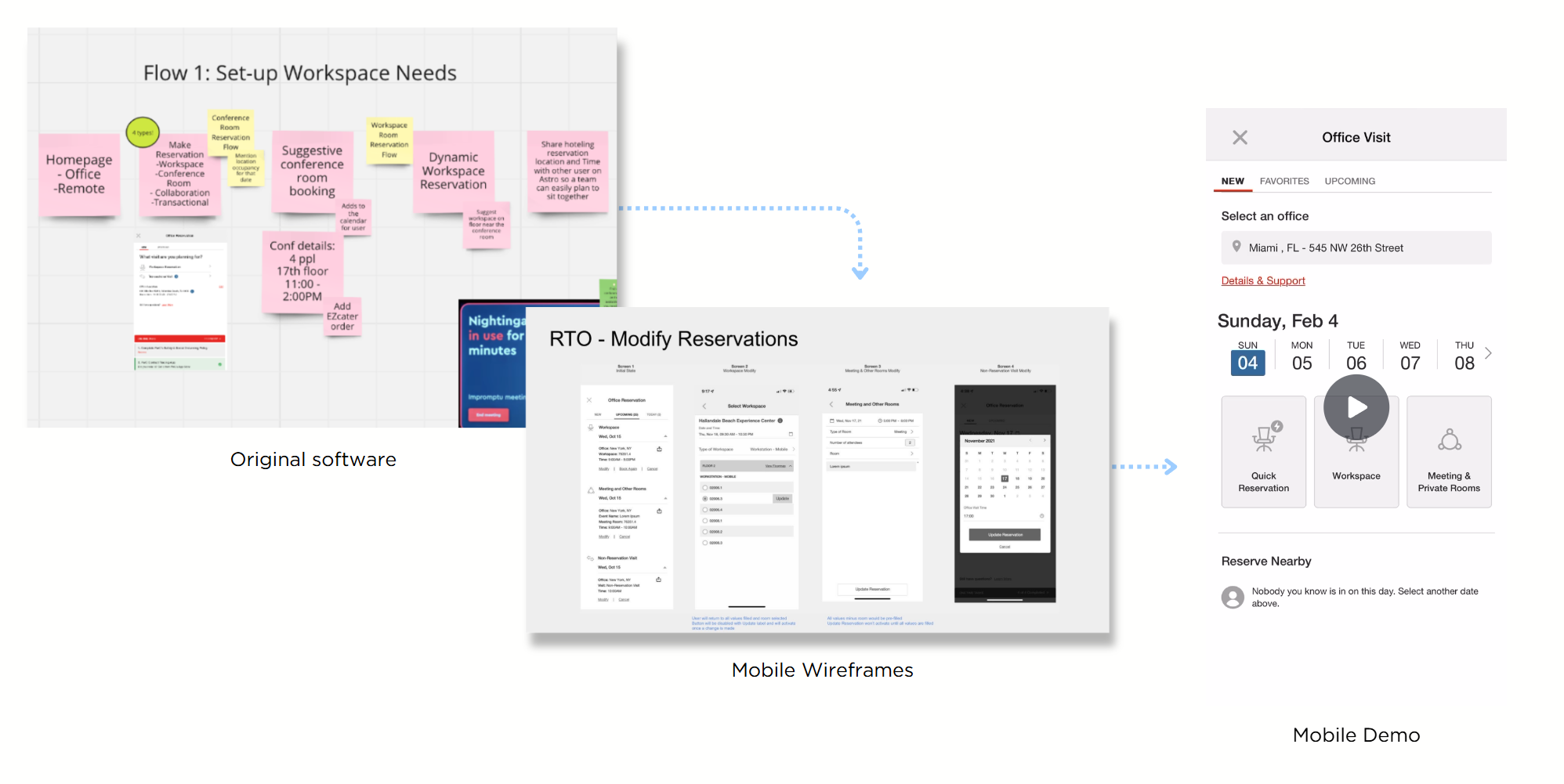
PwC needed to bring tens of thousands of people back into a fraction of the desks they used to have, without it feeling like a compliance system. I led the web and mobile experience for desk and space booking, designing a flow that gave employees control over their week instead of making them feel tracked.
The problem
The hard part wasn't the booking flow. It was that the same system leadership wanted for occupancy analytics was the system employees had to use every day. If it read as surveillance, adoption would collapse and the data would be worthless anyway. The job was to design something employees would actually open on a Sunday night to plan their week, not something they'd avoid until forced.
Approach
- 01
Discovery: the booking wasn't the friction
Talking to employees made it clear the form wasn't the problem. The uncertainty was. People didn't know which days their team would be in, so they didn't book. This redesign had to answer 'is it worth me coming in?' before it asked 'which desk?'
- 02
Designing around the surveillance tension
Every analytics surface had to justify itself to the employee, not just to facilities. We exposed the same occupancy data to users that leadership saw, framed as 'who's in today,' so the system felt like a planning tool first and a reporting tool second. That single reframe was the difference between adoption and avoidance.
- 03
Web + mobile, with one job each
Mobile owned the quick check-in and 'am I going in tomorrow' decision. Web owned planning the week and team coordination. Resisting the urge to ship the same flow on both surfaces kept the mobile experience under 30 seconds and the web experience actually useful for hybrid planning.
- 04
Rollout by region, not by feature flag
We sequenced rollout to each region's actual reopening date, with the local facilities team as the on-the-ground feedback loop, not a global flag flip.
Solution
Outcomes
30% lift in workspace utilization
Scheduling conflicts dropped sharply once real-time availability replaced the day-old occupancy reports facilities had been sending out
25% more employees opted into flexible desk arrangements, because the booking flow made hybrid feel like a choice instead of a compliance task
Adopted as the reference pattern for adjacent space-management tools, including the vaccination verification flow that shipped the following quarter
Key learnings
Analytics has to justify itself to the user, not just to the business.
The same data leadership wanted for occupancy reports had to feel useful to the employee opening the app on a Sunday night. The moment a data surface only serves the org chart, adoption dies and the data stops being real.
The social element became the product
People booked when they could see a colleague was already in. We spent weeks polishing the form and the win came from a single 'who's in today' module.
Phased rollout by office beat a global launch
Each region's reopening was its own first impression. Treating rollout as a sequence of local launches, not one global event, is how you protect the rest of the org from a bad first week in one city.
Next project
Designing for Compliance at Scale: Optimizing COVID-19 Vaccination Verification Funnel