PwC · 2018–2024 · Platform · Enterprise SaaS
Astro: From Napkin Sketch to Enterprise Platform
Astro is PwC's enterprise assistant for ~65K employees. I joined in 2018 when it was a partner's napkin sketch; starting as a mobile app for managers prepping client meetings, and grew into the design lead as it scaled into a firm-wide platform.
How the product evolved
2018
Era
Mobile assistant for client prep
2019–20
Pivot
Google → Microsoft migration
2021
Pivot
COVID: mobile → mobile + web
2024
Era
Enterprise platform · 65K users
2018Era
Mobile assistant for client prep
2019–20Pivot
Google → Microsoft migration
2021Pivot
COVID: mobile → mobile + web
2024Era
Enterprise platform · 65K users
Context
The hard part of Astro wasn't shipping any one version of it. It was holding the product's identity together while the company navigated two major strategy pivots regarding what Astro was for. Instead of a single launch, the product was a moving target: evolving from a mobile assistant for client-prep into a Microsoft-native tool, a remote-work platform, and finally a daily-use enterprise system. Same product, same users, three different strategies underneath. My job was to ensure Astro felt like one coherent product to its users even when, internally, it was being reinvented around them.
Where I focused over six years
Held the product together through two strategy pivots
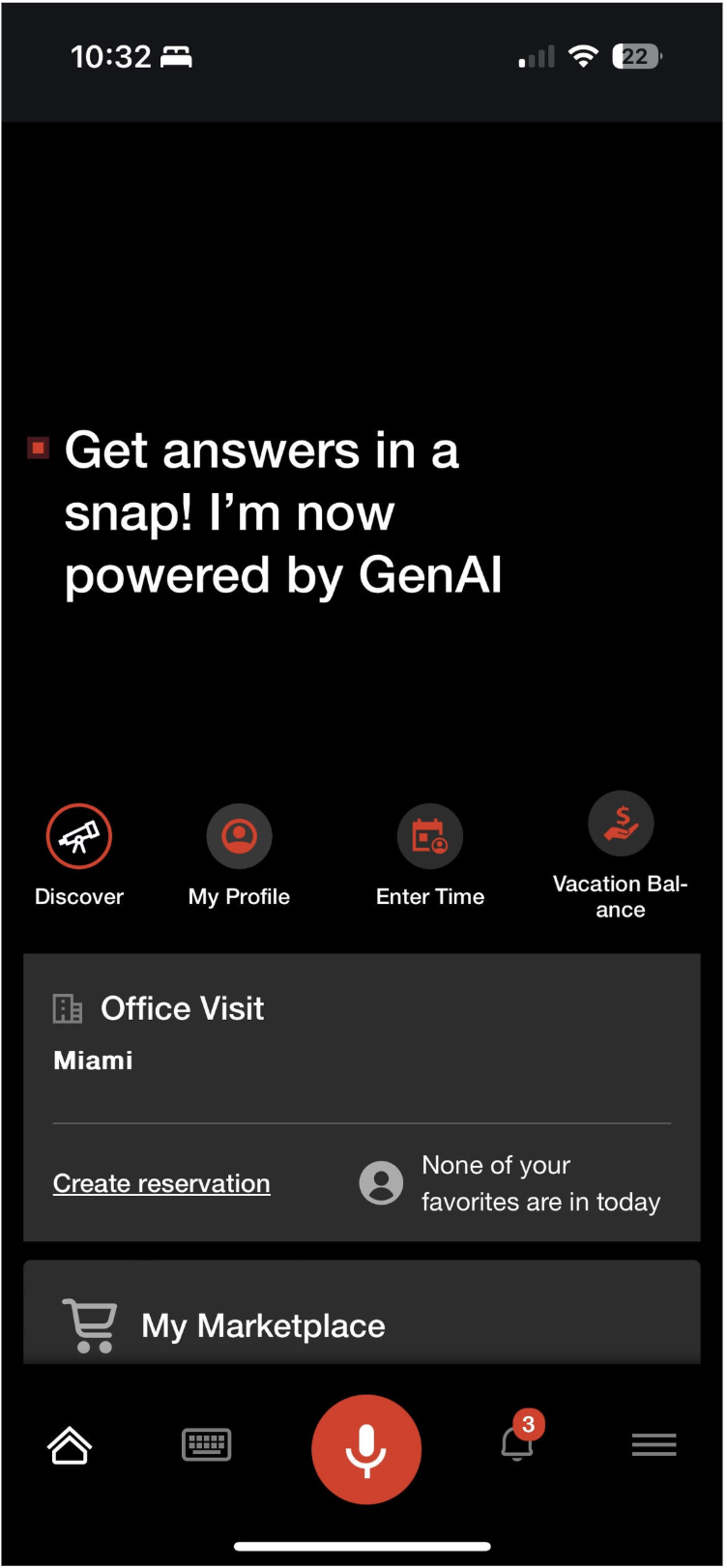
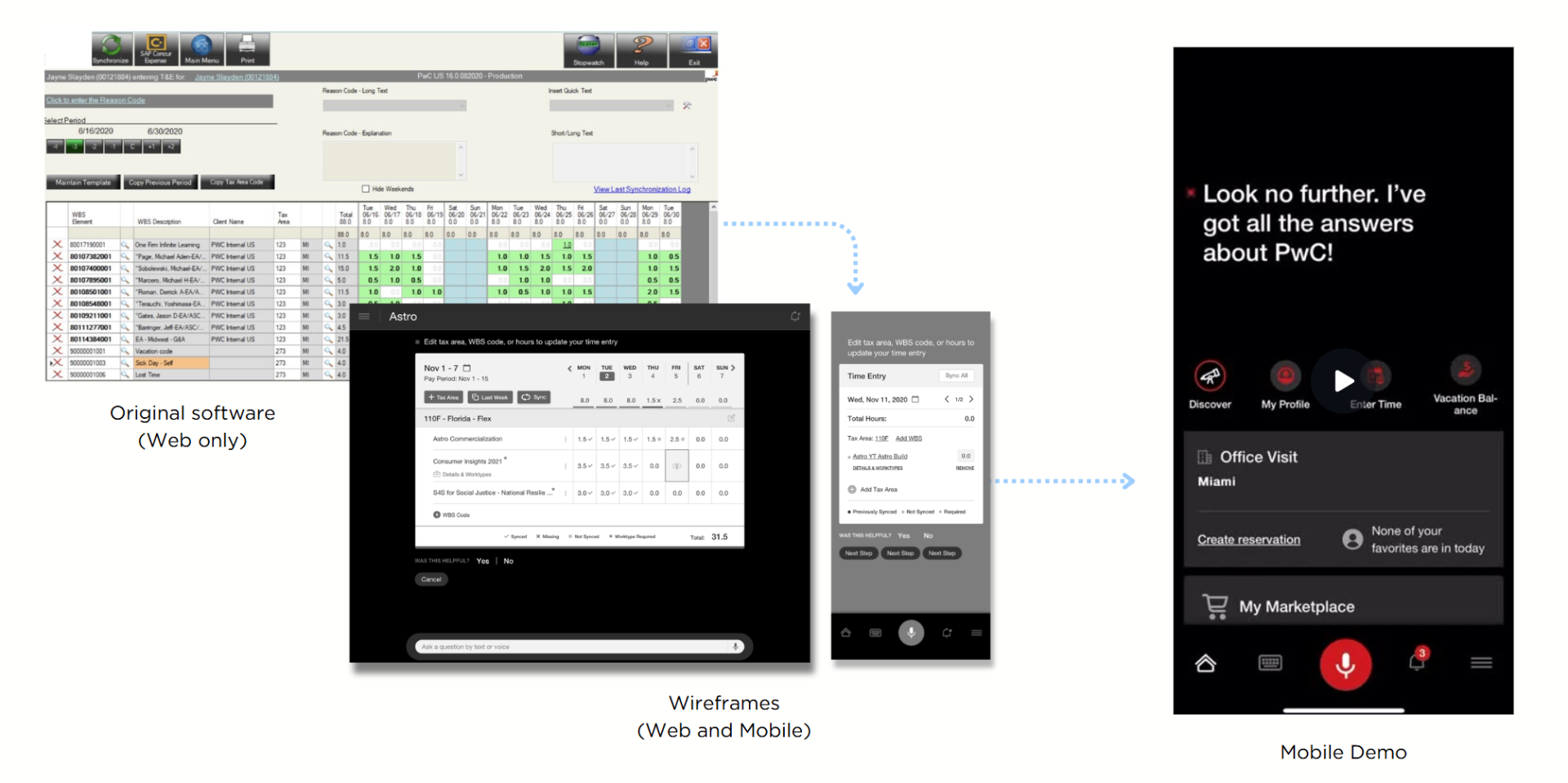
Provided design oversight as Astro absorbed PwC's firm-wide migration off Google to Microsoft, and again when COVID forced a mobile-first product to become mobile + desktop in weeks.
Established a research practice the product could evolve inside of
Set up a recurring research loop on the Astro toolbar to track how users were actually navigating between features over time, instead of guessing per launch.
Built reusable patterns across features, not one-offs
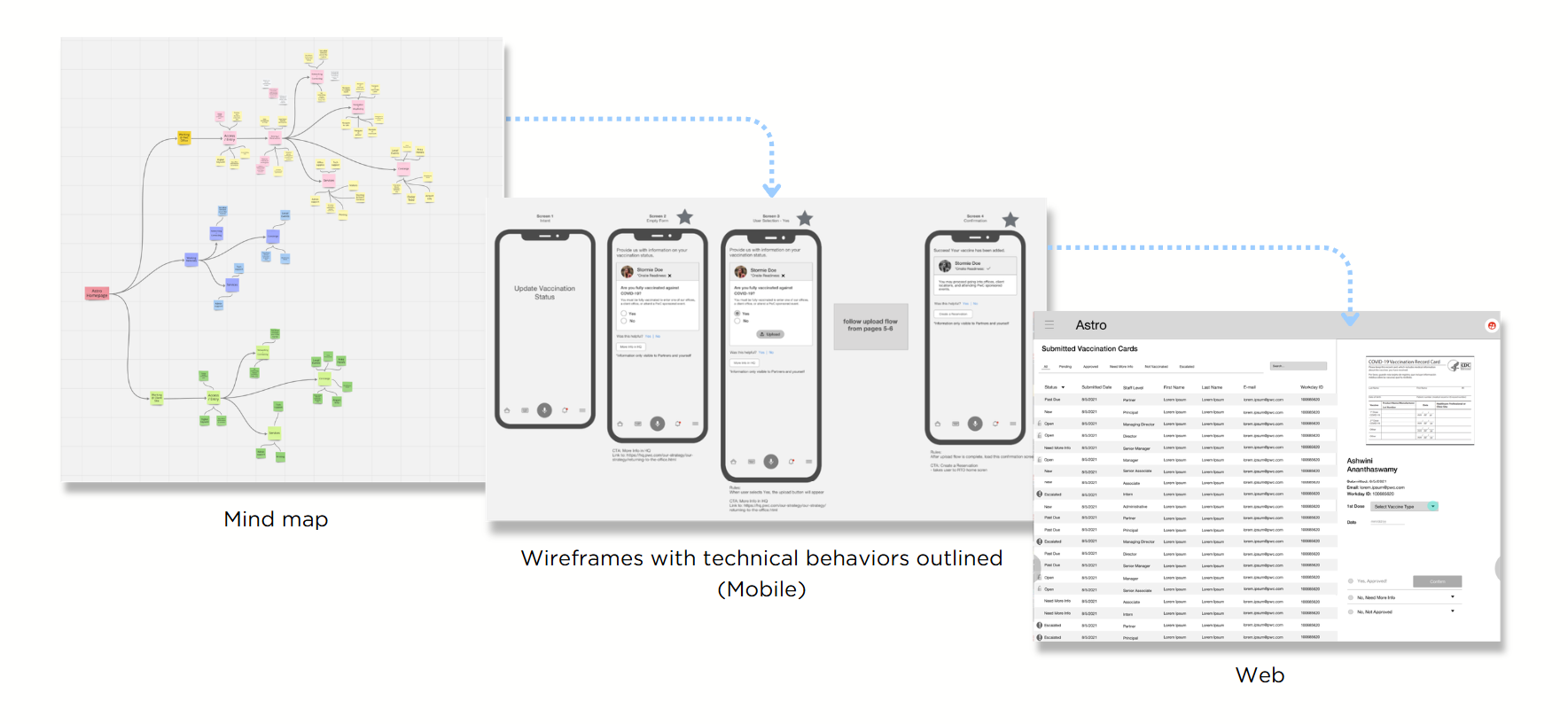
The in-app upload pattern you see in the vaccination flow wasn't built for vaccination. It was built to be the way Astro handled any user-submitted document.
Sequenced features around a shared shell, not a shared deadline
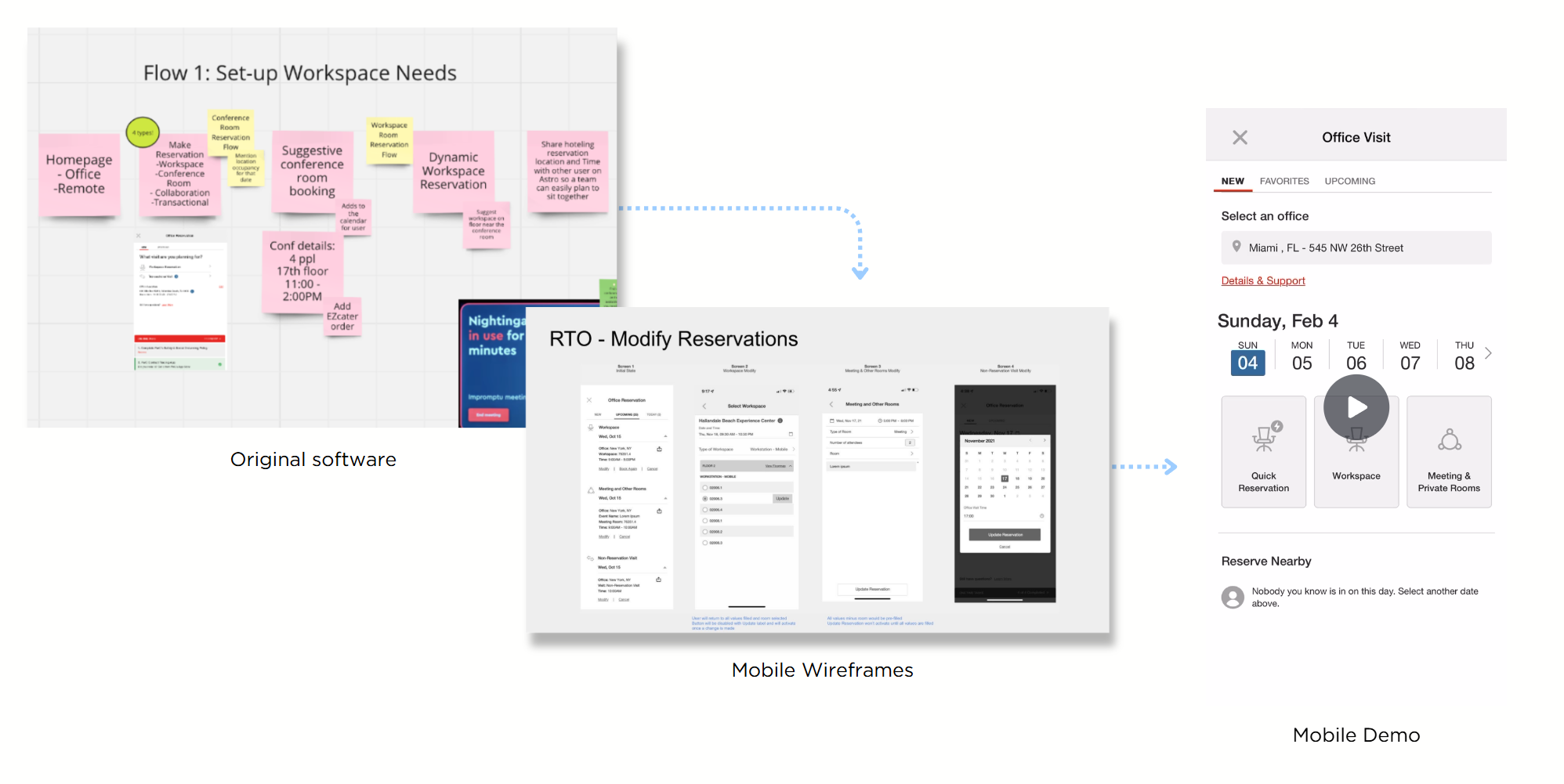
Each feature had its own urgency (mandate deadlines, RTO timing, billable revenue). The platform-level call was protecting the parts of the shell (navigation, status language, upload patterns) that every feature inherited, even when a single feature wanted to bend them.
Trained the next layer of designers on the product
Mentored 2–3 junior designers across ~2 years, handing off feature ownership as the platform scaled.
Next project
Humanizing Time-Entry: A Mobile-First Redesign for 65,000 Global Users